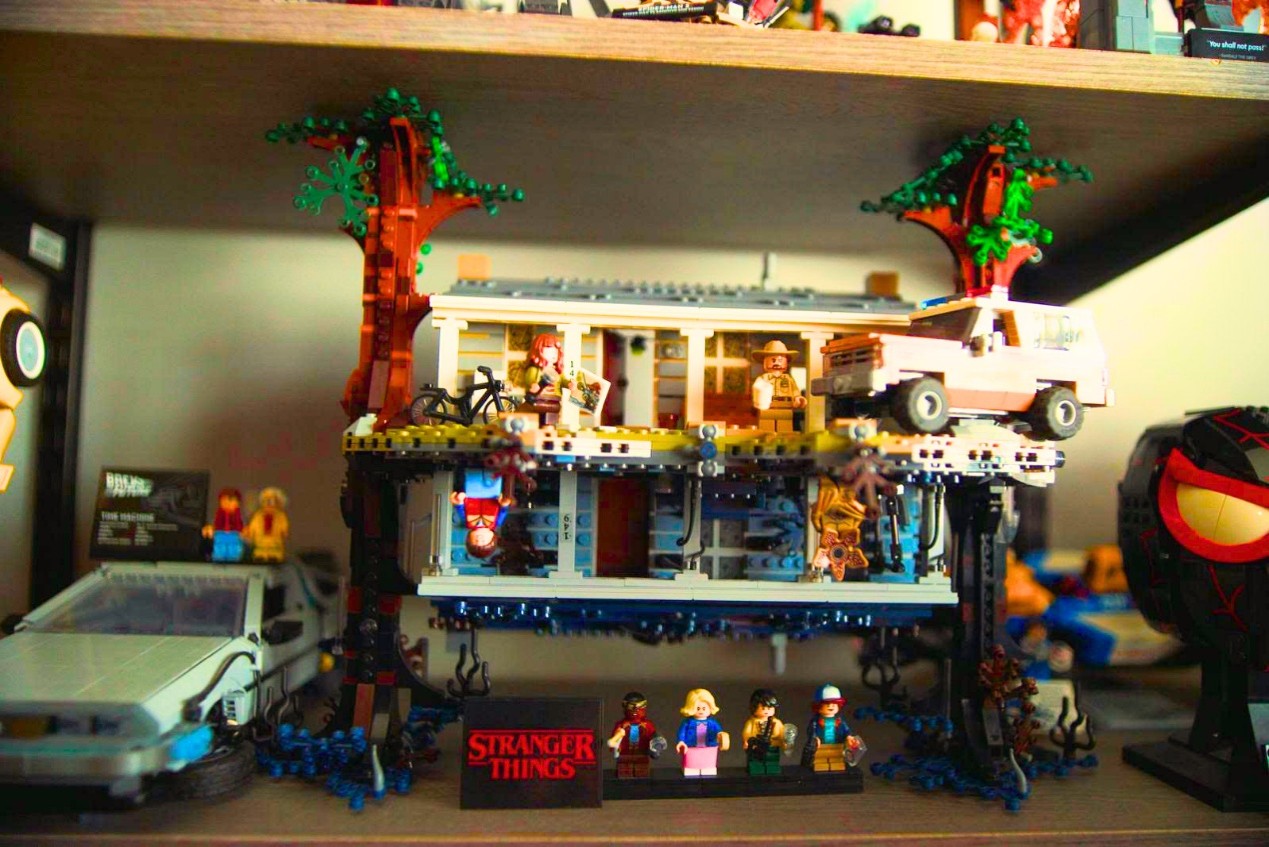
We showed up at his house, and saw his walls were covered in thousands of pounds worth of adult Lego.
Recently we interviewed a participant to screen ahead of a filmed event. He was excellent on Zoom. Professional background, self-assured, kept himself active at the gym and playing Sunday league football. It was an easy decision to sign him up.
A few weeks later we visited his home. It was sparse. One wall near the entrance had a collection of adult Lego supercars and later when he showed us around his “man cave” we saw shelves stacked wall to wall with Lego buildings, spaceships, figures and more.
He explained that during a relationship breakdown and a high stress moment at work, he started building Lego. It was the only thing that helped him switch off. “I reckon I’ve spent about £10,000 on Lego.”
Why hadn’t he mentioned a word of this on the call?
“Because Lego isn’t for grown men,” he explained.
Later that week a client asked me:
“What can we leave behind so doctors remember patient stories?”
In healthcare comms, we constantly talk about “empathy” and “authenticity”. But you don’t get that from a Zoom call or a synthetic persona.
We’ve all learned that certain parts of ourselves don’t belong in the “official” version, so we edit them out. You only capture the real, relatable human story if you show up and stay long enough to see past the “acceptable” version.
It’s the specific detail that doesn’t fit the story that usually explains how a person survives their life.
Our brains tend to ignore the repetitive and flag the unusual.
Psychologists call it the Oddball Effect.
Often, it’s the human moment in an otherwise logical narrative that sticks most. To get to that you need to leave your desk and get into people’s lives.
Authenticity and empathy come from showing up for the person you need to understand.
The problem is most people are too comfortable to do that and the risk for our audience is they are left with entirely forgettable patient stories.
That’s the cost of comfortable distance.